




Conferences
The project contributes to the development of a culture of quality in the education sector and lays the foundation for further international certification.
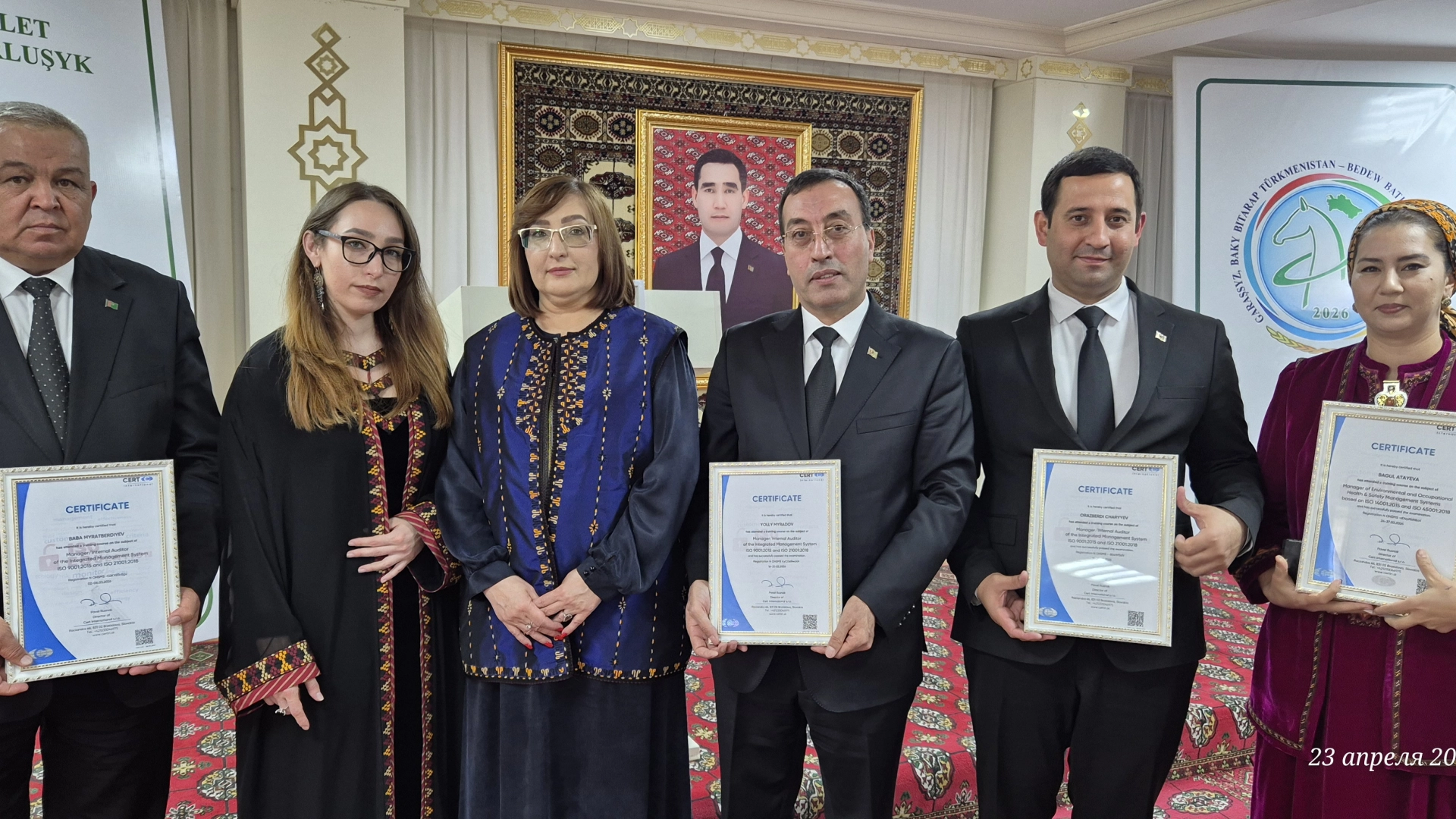
HIL-TM, together with its partner CERT Academy, successfully implemented a training program for the faculty of the Turkmen State Architecture and Construction Institute (TGASI).
The initiative was designed for professors and instructors who train the next generation of Turkmenistan's engineers, architects, and construction specialists. Rather than a one-off lecture series, the program was structured as a hands-on course combining theoretical foundations with practical exercises, case discussions, and real examples drawn from the construction and industrial sectors.
As part of the program, participants studied the requirements of the international standardsISO 9001, ISO 21001, ISO 14001, ISO 45001, and ISO 27001, as well as modern approaches to building integrated management systems. Special attention was given to how these standards interact with one another when implemented together, since most organizations today are expected to manage quality, environmental impact, occupational safety, information security, and educational governance not as separate initiatives, but as a single, coherent system.
For TGASI's faculty, the training offered more than technical knowledge of standard requirements — it provided a framework for teaching future specialists to think in terms of process management, risk assessment, and continuous improvementfrom the very start of their careers. This is particularly relevant for the construction industry, where compliance with international standards increasingly determines whether local companies can participate in large-scale projects and international tenders.
The project contributes to the development ofa quality culture in the education sectorand creates a foundation for future international certification.
By embedding ISO principles into academic training, HIL-TM and CERT Academy are helping build a long-term pipeline of specialists who understand global standards not as external requirements imposed on business, but as practical tools for building safer, more efficient, and more competitive organizations.